
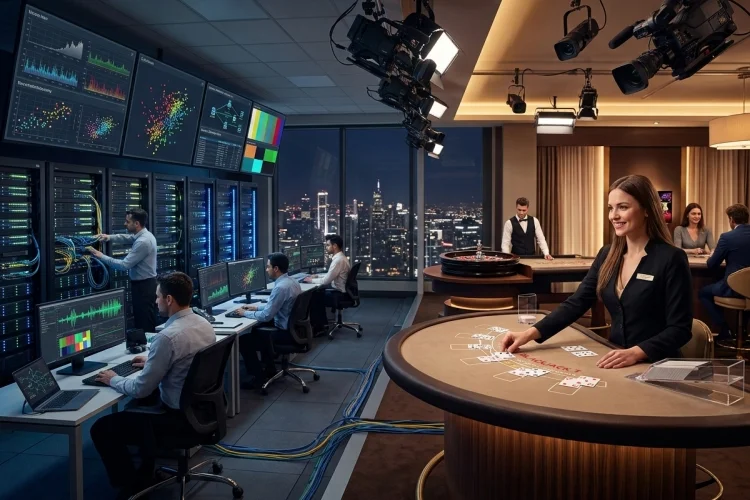
What Technology Powers Live Casino Games? Inside the System
A live casino table may look simple from the player’s screen. A dealer distributes cards, a roulette wheel spins, and digital betting controls appear beside the video.
Behind that presentation, however, several technologies must operate together almost instantly. Understanding what technology powers live casino games requires looking beyond the camera.
A modern system combines physical casino equipment, high-definition video production, optical character recognition, table-management software, a remote gaming platform, secure account services, and low-latency content delivery.
Every physical card or wheel result must be converted into reliable digital data, matched with accepted wagers, and displayed consistently across many devices.
The system must also manage delays, connection interruptions, human mistakes, surveillance records, and financial transactions. Technical testing organizations therefore evaluate more than the visual stream.
They may inspect the studio, player interface, synchronization process, staffing controls, and back-end systems.
Professional Studio Hardware
Live casino games begin in a controlled studio or an approved area inside a physical casino. The room normally contains gaming tables, professional lighting, microphones, cameras, monitors, card shoes, roulette wheels, and other commercial-grade equipment.
Multiple camera angles may be used to show the dealer, betting layout, cards, wheel, or bonus feature. Production software selects or combines these feeds so players can follow the important action without controlling the camera manually.
The UK Gambling Commission states that live dealer equipment and consumables should be of commercial casino quality. Designated staff must also monitor the integrity of operational equipment.
Optical Character Recognition Converts Physical Results
Optical character recognition, commonly shortened to OCR, connects the physical table with the online system. It reads visible information such as card ranks and converts the dealer’s actions into data that software can process.
A similar process may use sensors or specialized detection equipment for roulette wheels and other games. Once recognized, the result can appear in the digital interface, trigger the correct settlement, and update the game history.
Gaming Laboratories International explains that OCR can translate physical transactions – such as dealt cards or roulette outcomes – into usable software data. This lets the result originate from real equipment while still being handled through an online gaming platform.
The Gaming Platform Manages Every Wager
The gaming platform sits between the live studio and the player’s account. It receives wager instructions, verifies that the bet was submitted within the permitted time, and records the selected amount and betting position.
When the physical round ends, the platform receives outcome data and applies the table rules. It determines whether each wager wins, loses, pushes, or qualifies for a special payout.
GLI-19 describes live games as systems in which players view real-time audio and video through a graphical interface while sending decisions to the gaming platform. The same standards require procedures for disruptions involving video, audio, or data transmission.
Low-Latency Video Streaming
A live table needs a continuous stream with limited delay. Excessive latency could cause the video to show betting as open after the system has already stopped accepting wagers.
The studio’s raw video is encoded and compressed into formats suitable for internet delivery. Adaptive streaming can provide different quality levels, allowing the player’s device to select a stream that matches the available connection.
Low-Latency HLS is one example of a delivery format designed to reduce delays while retaining compatibility with common devices and browsers. WebRTC is another technology that supports real-time transfer of video, audio, and application data between browsers or connected devices.
CDNs Deliver the Stream Globally
A single studio server cannot efficiently send individual video feeds to a large international audience. Content delivery networks, or CDNs, distribute the stream through geographically dispersed edge locations.
When a player opens a table, the video may be delivered from an edge location closer to that person rather than traveling directly from the studio for every request. This can reduce loading time, network congestion, and buffering.
Amazon Web Services describes CloudFront as a CDN capable of delivering live video with low latency and high transfer speeds. Its documentation also explains that live video can be encoded into smaller versions before distribution to viewers.
Synchronization Keeps Video and Data Aligned
The card shown in the video must match the card listed in the interface. The countdown timer must also correspond with the actual betting window, while payout data must belong to the correct round.
To achieve this, systems attach timestamps and identifiers to game events. The platform then coordinates the video, table data, wager records, and dealer controls.
GLI includes synchronization testing among its standard live dealer evaluations. GLI-19 also requires the platform to inform players about relevant delays and procedures for interrupted live games.
Surveillance, Audit Trails, and Security
Live studios require surveillance because regulators and operators may need to reconstruct a disputed round. Cameras should provide enough information to determine whether game procedures were followed correctly.
The UK Gambling Commission requires live dealer operations to be fair and independently auditable. Its guidance covers surveillance, dealer training, documented rules, restricted access, equipment monitoring, and recording quality.
Digital security is equally important. Account activity, wagers, and result data must be protected against unauthorized access or alteration. The Commission’s security requirements are intended to ensure that remote gambling businesses maintain appropriate information-security controls.
Live casino games are powered by a connected ecosystem rather than one piece of software. Professional studio equipment creates the physical game, while cameras and microphones deliver the presentation.
OCR or specialized sensors convert real-world events into data, and the gaming platform records wagers, applies rules, and settles results. Encoding technology, low-latency protocols, and CDNs distribute the experience to desktop and mobile users.
Synchronization controls keep the stream aligned with betting information, while surveillance, audit records, encryption, and independent testing support integrity.
Before using a live casino, verify that the operator is licensed in your jurisdiction and that its games come from an approved supplier. Technology can create a transparent and immersive experience, but it does not remove the house advantage or guarantee winning results.